Dear Danielle,
Please find below the test methods I was following when I was working at SC Johnson.
- Spray pattern analysis
Spray Test Paper
Tape a section of test paper with minimum dimensions of 8.5 inch x 11 inch (22 cm x 28 cm) onto a flat vertical surface.
Shake the aerosol can for 5-10 seconds.
Actuate the valve and spray for one second to clear the dip tube of air.
Holding the can upright, aim the actuator at the center of the test paper and move the can to the proper spray distance from the paper surface, Record the spray distance that is used.
The proper spray distance is 8 inches (20 cm) for many products; however, this distance may be different with some products.
Depress the actuator for 1 to 3 seconds to produce a clear spray pattern with minimal drippage. For metered valves, one actuation should be conducted.
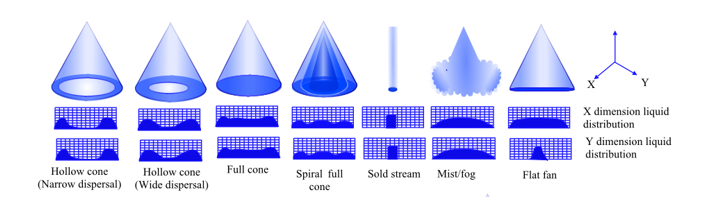
Measure the spray pattern diamete. When the spray pattern is not circular, measure both the height and width.
2. Flow rate testing or discharge rate
Compressed gas (CGA)
Prior to the evacuation of any contents, wipe the unit with a clean, dry cloth to remove any exterior residue.
Actuate the valve and spray for one second to clear the dip tube of air.
Record the initial weight of the full aerosol container.
The can pressure may optionally be measured if this is feasible and beneficial.
Hold aerosol at the normal use position, actuate for five seconds, and remove any residual product at the spray nozzle with a dry cloth. Record the actual spray time (T)
Record the can weight.
The can pressure may optionally be measured if this is feasible and beneficial.
Hold aerosol at the normal use position, actuate for five seconds, and remove any residual product at the spray nozzle with a dry cloth. Record the actual spray time (T)
Record the can weight.
The can pressure may optionally be measured if this is feasible and beneficial.
Repeat Steps 5.1.6 and 5.1.7 a at least twice, resulting in a minimum of three five‑second sprays.
Repeat Steps 5.1.3 through 5.1.8 with the can 75% full, 50% full, and 25% full by weight. Testing is complete once sputtering begins to occur.
Liquefied petroleum gas (LPG)
Prior to evacuation of any contents, wipe the unit with a clean, dry cloth to remove any exterior residue.
Actuate the valve and spray for one second to clear the dip tube of air.
Record the weight of the aerosol container before spraying (Wbs).
The can pressure may optionally be measured if this is feasible and beneficial.
If shaking is required for consumer use, vertically shake the can for 8 - 10 seconds.
Hold the aerosol at the normal use position and actuate as described below.
When evaluating single-use products that are intended to be sprayed until empty during the first use, record the amount of time required (T) to spray the product until it is empty, remove any residual product at the spray nozzle using a dry cloth, record the empty can weight, and proceed to Step 6.
When evaluating miniature aerosols with a can volume below 100 ml, spray for three seconds (with a continuous-spray valve) or actuate six times (with a metered valve) and remove any residual product at the spray nozzle using a dry cloth. Record the actual spray time (T).
When evaluating standard aerosols with a can volume of 100 ml or higher, the spray time is dependent on the formula type.
For aqueous formulas, spray for five seconds (with a continuous-spray valve) or actuate ten times (with a metered valve).
For organic solvent-based formulas, spray for ten seconds (with a continuous-spray valve) or actuate ten times (with a metered valve).
Remove any residual products at the spray nozzle using a dry cloth and record the actual spray time (T).
Record the weight of the container after spraying (Was).
The can pressure may optionally be measured if this is feasible and beneficial.
Repeat Steps 5.2.4 through 5.2.7 twice, resulting in a total of three sprays followed by weight measurements.
Allow the can to equilibrate at room temperature to reduce the effects of cooling on the spray rate. Room temperature is achieved once the can is no longer cold to the touch.
A temperature equilibration time of at least 30 minutes is typically needed in air.
Shorter temperature equilibration times are possible when the can is immersed in ambient temperature water.
For LPG products utilizing metered valves, repeat Steps 5.2.3 through 5.2.9 with the can 75% full, 50% full, and 25% full by weight. Testing is complete once sputtering is observed.
CALCULATIONS
Determine Discharge Rate (DR) at all specified time intervals:
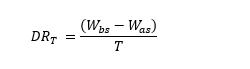
Where: DRT = Discharge rate in grams per second
Wbs = Weight before spray in grams
Was = Weight after spray in grams
T = Spray time in seconds
3. Particle size analysis
You need to have Low Angle Laser Light Scattering (LALLS) spray analyzer system such as the Malvern Spraytec, located inside of a room with consistent lighting and Windows-based computer equipped with operation and analysis software for the LALLS analyzer.
Please let me know if you need further support.
------------------------------
Omar Mohamed
Packaging Development Manager
Beyti- An Almarai subsidary
Cairo
010 96355560
------------------------------